




Magazine
Foliage Photo Tips
HOW IS THE FOLIAGE going to be this year? It’s more than a passing interest at Yankee magazine. It’s an obsession! I worked in Yankee‘s art department for 15 autumns, and New England’s color was always spectacular. Some years there was a little more red or the leaves turned earlier than the year before, but […]

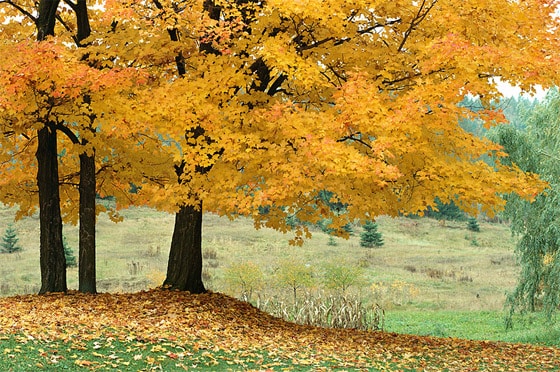
HOW IS THE FOLIAGE going to be this year? It’s more than a passing interest at Yankee magazine. It’s an obsession! I worked in Yankee‘s art department for 15 autumns, and New England’s color was always spectacular. Some years there was a little more red or the leaves turned earlier than the year before, but it was always beautiful. Always.
I reviewed more than 500,000 foliage photos as picture editor for Yankee. Not all were beautiful, but some were so spectacular I wanted to climb right into them. For the latest advice, I talked to three of my favorite foliage shooters — Steve Muskie, Kindra Clineff, and Alison Shaw. Here are their tips to help you create better photographs on your New England foliage safari.
DIGITAL TIPS
DIGITAL TIPSSteve Muskie ran thousands of miles of film through his camera shooting Yankee Magazine stories over the years. But five years ago he sold the last of his film cameras and hasn’t bought a roll of film since. Why? “You feel freer experimenting,” he says. “You’re not worried about film and processing costs. If you shoot something that doesn’t work, you just get rid of it.” See Steve’s photography at outtakes.com. And there are other benefits for shooting foliage with a digital camera. If your camera has a choice of “auto white” balance or choosing a setting, Steve urges you to choose daylight. This gives you daylight “film,” so when you shoot a brilliant red or yellow tree at sunset, the camera will read those colors or even exaggerate them a bit. If you shoot the same sunset photo at the “auto white” setting, the colors will be neutralized and you’ll be disappointed.FILTERS
A polarizing filter will improve color for both film and digital cameras. Steve admits he should use his polarizing filter more than he does because “it can make such a big difference with foliage and the sky.” In sunny conditions, a polarizing filter will cut glare and capture brighter colors in the leaves and sky. This offers better overall definition. Use a circular polarizing filter; while looking through the viewfinder, turn the ring until you see the desired effect. The other big benefit of many digital cameras is that you can adjust the ISO anytime you’d like. If you’re out in bright light shooting at ISO100 but later in the day are in the woods and conditions require ISO400 or higher, you just press a button. The technology has gotten so good that the faster speeds look better in digital form than any of the faster films, Steve says.FILM
If you’re still using a film camera and want handy prints to pass around or put in an album, use print film. ASA 100- or 200-speed film will give you better color than faster films (such as ASA 400) and will allow you to make crisper enlargements. If you want the absolute best images, shoot slide film. Kindra Clineff has filled many magazines and calendars with her foliage photos. Her favorite film is Velvia (ASA 50), a transparency film she loves for its rich color saturation. This particular film is soon to be discontinued, and Kindra will have to switch to Velvia 100 once she depletes her stockpile. Kindra urges anyone serious about their photographs to pay the extra money for professional film from a real camera shop. The color is better, and it has been perfectly aged and properly stored. “Film is like fruit. The professional film is ripe,” she says.PROCESSING
If your prints come back looking grainy or gray, it’s most likely the processing, not your camera. Old chemicals result in washed-out prints. Invest in better-quality processing. Ask to see samples before you trust anyone to process your film.COMPOSITION
Keep it simple. Look for a dominant element, such as one tree in a field or a single branch of leaves against the sky. Alison Shaw suggests that photographers “isolate elements by using a shallow depth of field. This allows one tree or part of a tree to be in focus while everything else is out of focus.” The sharp part of the photo is then your dominant subject. “Change your point of view,” advises Kindra. “Get down on your belly and shoot through things, letting objects in the foreground go out of focus. This will give you a nice wash of color in the foreground and lead you into the background that you’ve kept in focus. Or you can keep the foreground sharp and let the background go soft.” Get up high, too. Kindra says fire towers are great for giving you that big view on a clear day. But she warns it’s difficult to get vibrant color in the big overall shots, so make sure you try tighter compositions: a few branches of a tree hanging over a stone wall, for instance, or leaves on a pond.WHEN TO PHOTOGRAPH
Early morning and late afternoon provide the most interesting light, but don’t grumble on an overcast or rainy day. Alison insists that she loves to shoot foliage in these conditions. “Overcast days will show color better than sunny ones,” she says. Kindra’s favorite time to shoot is during the 30 minutes before and after sunrise and sunset. But, she adds, “don’t put your camera away in the middle of the day. And forget all that advice about keeping the sun behind you when you photograph.” She prefers shooting into the sun so her subjects are backlit. If you’ve ever seen a sugar maple with the sun punching through the leaves, you’ll agree. Be sure to protect your lens from sun flares. A lens hood or a piece of cardboard will shade your lens from the sun.LENSES
“Avoid wide-angle lenses,” says Alison. If you want the big, long view, “Buy the postcard.” Alison suggests that a photographer “come in closer, focusing on a single tree — or just part of it.”IF YOU WANT THE VIEW
Well, then do what Kindra does. “Be sure to have something interesting in the foreground to frame the view,” she says. This can be a porch railing, a tree, or whatever strikes your fancy. Remember backlighting, when applicable.MOTION
Alison reminds us that “everything doesn’t have to be in focus. If you’re near running water, put your camera on a tripod and focus on some bright leaves on a rock just above the water. Set your shutter speed for one second or longer. This will give you a sense of movement in the brook while capturing the still part of the frame as you see it.” On a windy day, use a tripod and focus on a beautiful tree or row of trees. Be sure the trunk is in focus, and expose your film at half a second or slower. The trunks will be sharp, and the moving leaves will create a lovely, fiery look. Experiment with slower and slower shutter speeds.REFLECTIONS
Early morning is the best time to capture reflections in a lake or pond. The water is more likely to be still, and you may get mist rising off the water. When asked how she keeps photographing foliage in fresh ways, Kindra says, “It is such a short season every year — fleeting, really. I don’t have time to get bored with it. So at the end of each autumn, I look forward to the next one, when I can go to new places or return to some of the old favorites and try something different.”
